
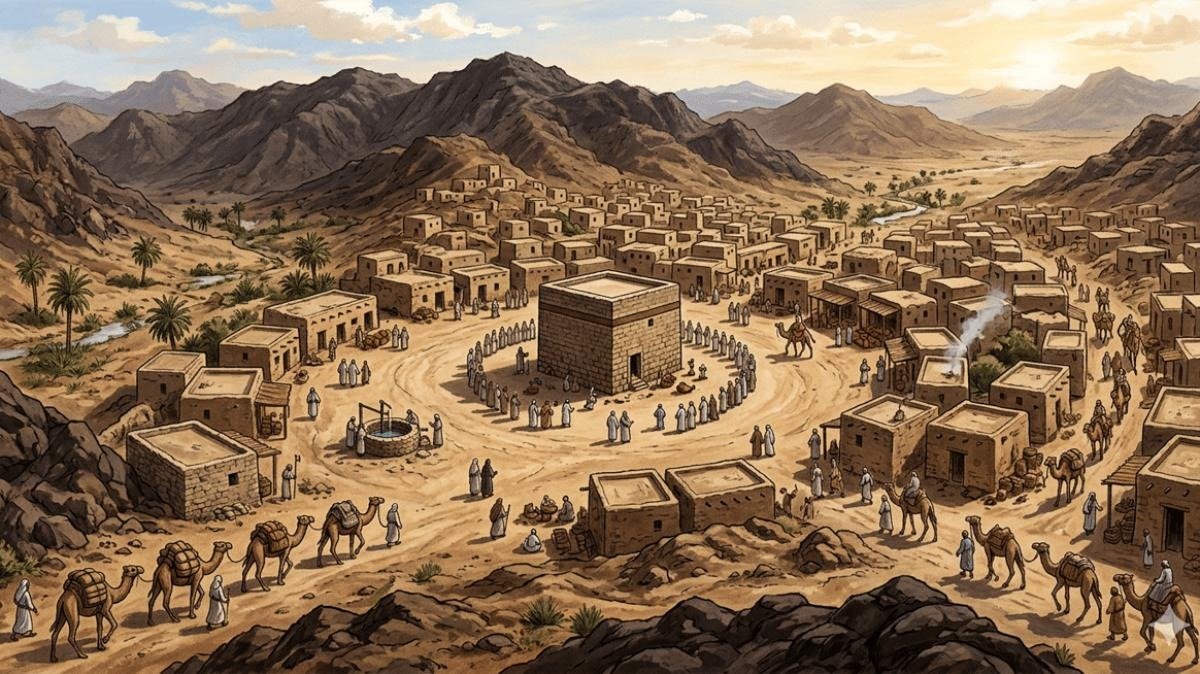
Introduction: Before the Light of Prophethood
Every great story has a beginning. Before Prophet Muhammad ﷺ received revelation, before Islam spread throughout Arabia, and before the Muslims established their community in Madinah, there was a family in Makkah whose story became part of the history of humanity.
Muhammad ﷺ was born into Banu Hashim, a respected clan of Quraysh. His father was Abdullah ibn Abd al-Muttalib, and his mother was Aminah bint Wahb. Their son would become the final Messenger of Allah, bringing guidance, mercy, and a message for all humanity.
In this part of our Seerah journey, we will explore the lives of his parents, the circumstances surrounding his father's death, the historical setting of his birth, and the lessons we can learn from the beginning of his life.
1. Abdullah ibn Abd al-Muttalib — The Father of the Prophet ﷺ
Abdullah ibn Abd al-Muttalib belonged to Banu Hashim, one of the clans of Quraysh in Makkah. His father, Abd al-Muttalib, was a prominent figure in the city and the grandfather of the Messenger of Allah ﷺ.
Abdullah was part of a family whose social standing was closely connected with Makkah and its sacred sanctuary. However, the surviving historical accounts provide relatively limited information about Abdullah's personal life. We should therefore avoid presenting later stories about him as established facts unless they are supported by reliable evidence.
What we know from the traditional Seerah narrative is that Abdullah married Aminah bint Wahb and died before their son Muhammad ﷺ was born.
His early death meant that the child who would eventually carry Allah's final message into the world would begin life without the protection and companionship of his father.
This was the first major family loss in the Prophet's ﷺ life, although it occurred before he was old enough to understand it.
2. Aminah bint Wahb — The Mother of the Prophet ﷺ
Aminah bint Wahb belonged to Banu Zuhrah, another respected clan of Quraysh. Her marriage to Abdullah connected two prominent families of Makkah.
Although the Seerah sources preserve fewer details about Aminah's life than they do about the Prophet ﷺ himself, her place in his story is deeply significant. She was the mother who carried him, gave birth to him, and cared for him during the earliest years of his life.
The Qur'an does not provide a detailed biography of Aminah. Consequently, when writing about her, it is important to distinguish established historical information from popular accounts whose chains of transmission may be uncertain.
Her story also reminds us that the Seerah is not only the history of public events and great leaders. It includes the lives of family members whose experiences shaped the early life of the Messenger of Allah ﷺ.
3. The Marriage of Abdullah and Aminah
Abdullah and Aminah were married in Makkah according to the traditional Seerah accounts.
Their marriage brought together Abdullah of Banu Hashim and Aminah of Banu Zuhrah. These families belonged to Quraysh, the tribe that held a central position in Makkah's religious, social, and commercial life.
The marriage would become historically significant because their child would be Muhammad ibn Abdullah ﷺ.
However, it is important not to invent details about their private life or attribute particular conversations, emotions, or extraordinary signs to them without reliable evidence.
The central fact is simple but profound: Allah's final Messenger ﷺ was born to Abdullah and Aminah, and the family circumstances surrounding his birth would shape the beginning of his earthly life.
4. Abdullah's Final Journey and Death
Traditional Seerah accounts report that Abdullah died before the birth of his son.
Some biographical reports explain that Abdullah had travelled to Yathrib, later known as Madinah, and died there while returning from a journey. The precise details and circumstances belong to the historical Seerah tradition and should not be confused with an explicit statement in the Qur'an or a universally established authentic hadith.
The essential point is that Abdullah did not live to raise Muhammad ﷺ.
When the child was born, his father was already gone. The Prophet ﷺ therefore entered the world as a fatherless child.
This early loss would be followed by other bereavements during his childhood. Yet his life would eventually become a powerful example of patience, resilience, compassion, and trust in Allah.
5. The Birth of Muhammad ﷺ
The Prophet Muhammad ﷺ was born in Makkah, into Banu Hashim of Quraysh.
Traditional Muslim historical accounts associate his birth with the Year of the Elephant, commonly placed around 570 CE. This name refers to the famous event involving an expedition against the Ka'bah, remembered in Surah Al-Fil of the Qur'an.
Allah says:
“Have you not seen how your Lord dealt with the companions of the elephant?”
— Qur'an 105:1
The surah describes Allah's protection of the Sacred House from the people of the elephant. It does not, however, explicitly state the Prophet's birth date or identify the year in the way later historical accounts do.
The exact calendar date of his birth is disputed among historians and scholars. The commonly cited date of 12 Rabi' al-Awwal is not unanimously established. For historical accuracy, it is best to state that he was born in Makkah in the Year of the Elephant, traditionally dated to around 570 CE, while acknowledging uncertainty about the precise date.
His birth marked the beginning of a life through which Allah would guide humanity. The child born in Makkah would grow up to call people to worship Allah alone, uphold justice, care for the vulnerable, and develop a community founded on faith and moral responsibility.
6. Why Is He Called an Orphan?

Because Abdullah died before Muhammad ﷺ was born, the Prophet ﷺ began his life without a father.
The Qur'an later reminded him of Allah's care during his early life:
“Did He not find you an orphan and give you shelter?”
— Qur'an 93:6
This verse is part of Surah Ad-Duha, in which Allah reminds the Prophet ﷺ of His favour and reassurance.
The verse does not mean that the Prophet ﷺ never experienced hardship. Rather, it highlights that Allah provided care and protection for him through the people who looked after him.
The loss of his father was followed by the loss of his mother when he was about six years old, according to the traditional Seerah chronology. His grandfather Abd al-Muttalib then cared for him, and after his grandfather's death, his uncle Abu Talib took responsibility for him.
These events belong to the next stages of the Seerah, but they help us understand the circumstances into which Muhammad ﷺ was born.
7. The Year of the Elephant
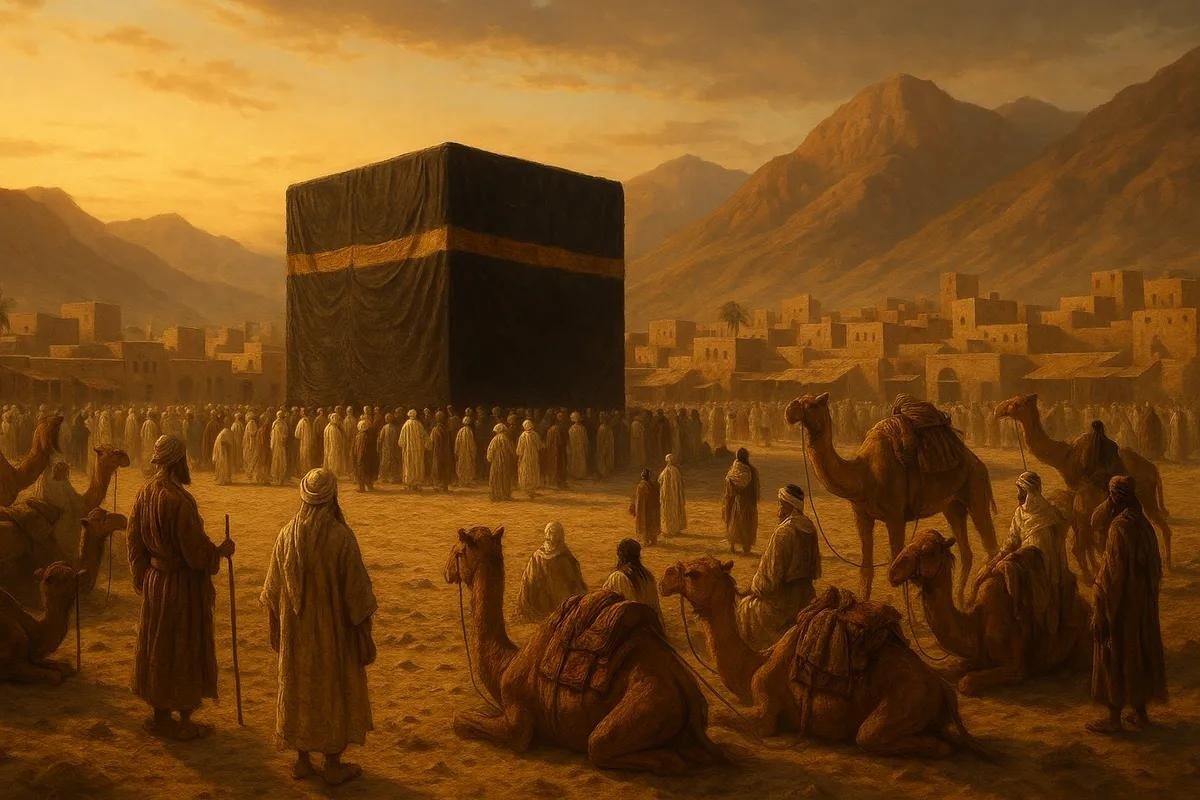
The Year of the Elephant holds an important place in Islamic historical memory.
Surah Al-Fil recounts how Allah dealt with the companions of the elephant who came against the Sacred House. The surah emphasizes Allah's power and the protection of His sanctuary.
Later Muslim historical accounts connect this event with the year of Muhammad's ﷺ birth. The exact historical details, chronology, and relationship between individual reports should be treated carefully, but the association became a well-known part of the traditional Seerah narrative.
For readers of the Seerah, this event also establishes the historical setting of Makkah before the beginning of the Prophet's ﷺ public mission.
Makkah was a sacred city with an ancient religious history. Its sanctuary, the Ka'bah, was central to its identity, and Quraysh occupied an influential position in its society.
Into this setting, Muhammad ﷺ was born.
8. What Can We Learn from the Beginning of His Life?
The early circumstances of the Prophet's ﷺ life offer several important lessons.
First: A difficult beginning does not determine a person's future.
Muhammad ﷺ lost his father before birth. Yet Allah would later appoint him as the final Messenger. His early circumstances did not prevent him from fulfilling the mission entrusted to him.
Second: The care of an orphan is a noble responsibility.
The Qur'an repeatedly emphasizes kindness toward orphans and vulnerable people. The Prophet's ﷺ own early experience helps readers appreciate the importance of compassion, protection, and dignity for children who grow up without parental care.
Third: Historical accuracy matters.
The Seerah is a sacred and meaningful subject for Muslims. It deserves to be presented carefully, distinguishing Qur'anic evidence and authentic hadith from historical reports that are uncertain or disputed.
Fourth: Allah's care can be present even during hardship.
The Qur'anic reminder in Surah Ad-Duha invites believers to reflect on how Allah provided shelter for the Prophet ﷺ during his early life. It also encourages compassion toward those who face loss or vulnerability.
9. A New Chapter in the Seerah
The story of Muhammad ﷺ begins with a respected family in Makkah, a father who died before his son's birth, and a mother who would care for him during his earliest years.
His birth took place in the Year of the Elephant according to traditional Seerah accounts, in a city shaped by the history of the Ka'bah, the influence of Quraysh, and the religious practices of pre-Islamic Arabia.
Yet his life would not remain confined to Makkah. He would eventually receive revelation, call people to worship Allah alone, and transform the religious and moral landscape of Arabia.
Before that mission began, however, he was a child whose early life would include both care and loss.
The next part of our journey will explore his birth and earliest childhood in greater detail, including the traditional accounts of his naming, his early care, and his time among the people of Banu Sa'd.
To Be Continued
Part 4: The Birth and Early Childhood of Prophet Muhammad ﷺ
References and Further Reading
The Qur'an, Surah Al-Fil (105:1–5) — the account of the companions of the elephant.
The Qur'an, Surah Ad-Duha (93:6–8) — Allah's care for the Prophet ﷺ during his early life.
Sahih Muslim 2276 — the Prophet's ﷺ statement about Allah choosing Kinana, Quraysh, Banu Hashim, and then him from Banu Hashim.
Classical Seerah literature, including the biography of Ibn Ishaq as preserved by Ibn Hisham, for traditional accounts of the Prophet's family and early life.
Editorial note: The exact date of the Prophet's ﷺ birth and some details surrounding Abdullah's death are disputed in historical literature. This article therefore distinguishes the traditional Seerah narrative from details explicitly established by the Qur'an or authentic hadith.